
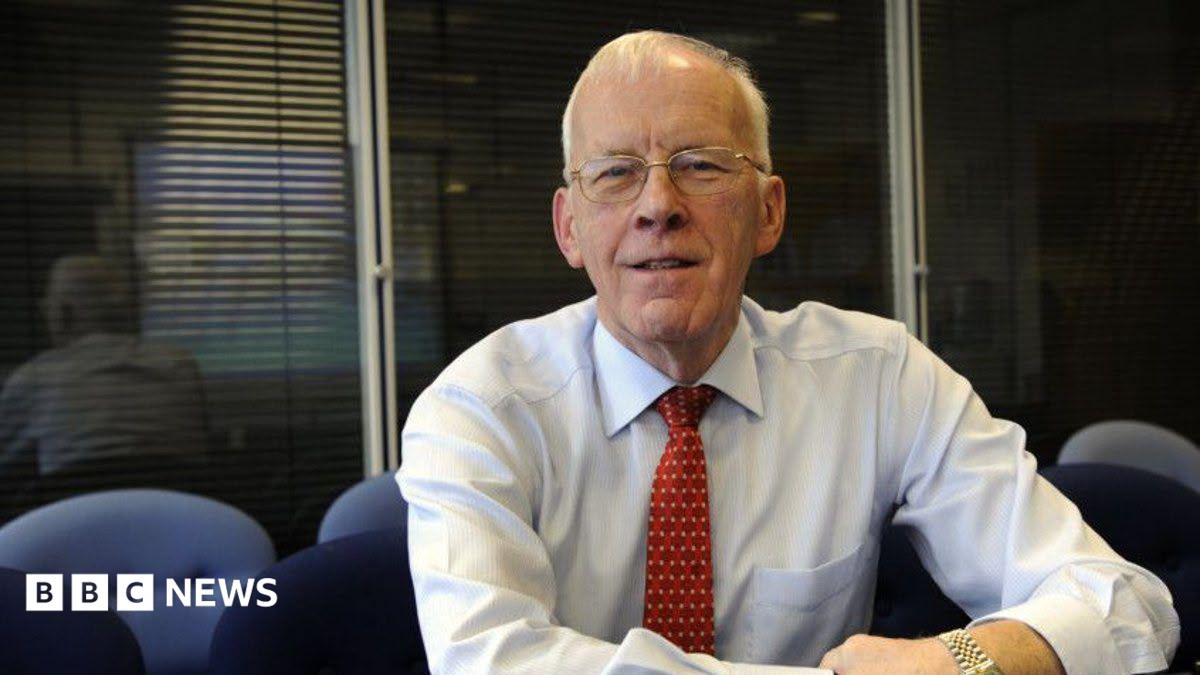























SHOCKING levels of deprivation in York inspired York cocoa magnate Seebohm Rowntree to conduct pioneering surveys into poverty more than a century ago.
His reports into poverty in York at the turn of the 20th century shocked Victorian society and caught the attention of politicians including David Lloyd George and Winston Churchill and paved the way for our modern welfare state.
York Slums, adults and children, c 1900. Credit Joseph Rowntree Foundation.
Seebohm Rowntree’s trailblazing work is the subject matter for a new community play currently running at York Theatre Royal – His Last Report.
But who was Seebohm Rowtree – and why was his life’s work so influential?
Here is the story…
1. Born Benjamin Seebohm Rowntree in 1871, he was the second of the four sons of York cocoa entrepreneur Joseph Rowntree. A chemistry graduate, he was a stalwart of the family cocoa and chocolate business until retirement in 1941, having been chairman since 1923.
2. Seebohm published three reports into poverty: Poverty: a Study in Town Life (1900); Poverty and Progress (1941), and Poverty and the Welfare State (1951).
3. The first book had the biggest impact, rocking Victorian society, with its detailed descriptions of the deprivation facing York’s working classes.
4. The book drew attention to the conditions of shocking poverty in which many people in late Victorian Britain were living. Seebohm coined the term “poverty line”. And his research revealed that more than 20,000 people in York – almost half the working class population – were living in poverty.

5. Rowntree found two main reasons for poverty. In a quarter of cases, the chief wage-earner of the family was dead or unable to work due to age, disability or unemployment. However, in more than 50 per cent of cases, the breadwinner was in regular work: his wages were simply too low to meet his family’s needs. Unskilled Labourers earned roughly 90 to 100 pence a week in York in 1899, yet Rowntree estimated that at least 120 pence was needed to keep a family with three children out of poverty. The belief that a man could provide for his family if he was thrifty and hard-working was shown to be false.
6. Among those shocked by Rowntree’s findings was Winston Churchill. After reading the book, he commented: “For my own part, I see little glory in an Empire which can rule the waves and is unable to flush its sewers”.
Recommended reading:

7. The work of Seebohm Rowntree, and of his fellow pioneer, Charles Booth, who published a study of the London poor, led to the Liberal reforms of 1906-1912, and ultimately to the welfare state.
8. In York, his legacy remains. As chairman of Rowntree and Company, Seebohm Rowntree was instrumental in the creation of the Joseph Rowntree Theatre, named after his father. Seebohm’s poverty report also inspired his father Joseph to establish New Earswick as a model or garden village to provide decent and affordable housing for his factory workers.

Life in poverty in York
Some examples from Seebohm Rowtree’s notes reveal the human tragedy beneath the statistics. They include:
• Labourer, Foundry. Married. Four rooms. Four children. Steady: work regular. Man has bad eyesight, and poor wage accordingly. Family live in the midst of smoke. Rent cheap on account of smoke. Rent 3s.
• Spinster. One room. Parish relief. Seems ill for want of proper support. House as clean as a sick woman can make it. Shares a water-tap with eleven other houses, and a closet (toilet) with three others. Rent 2s.
• The report revealed how wages paid for unskilled labour were not enough for a moderate-sized family to survive on. Even families who could manage to barely survive, he went on, “must never spend a penny on railway fare or omnibus.” He wrote: “They must never go into the country unless they walk. They must never purchase a halfpenny newspaper or spend a penny to buy a ticket for a popular concert. They must write no letters to absent children, for they cannot afford to pay the postage… The children must have no pocket money for dolls, marbles, or sweets… Finally, the wage-earner must never be absent from work for a single day.”

His Last Report is at York Theatre Royal’s Main House stage from July 19 to August 3. Tickets are on sale now via Box Office (01904 623568) and online at www.yorktheatreroyal.co.uk/show/his-last-report/.






:max_bytes(150000):strip_icc():focal(471x244:473x246)/CNN-New-Years-Eve-with-Anderson-Cooper-123124-9952e5f00fc1425f87113ba2bfb97b29.jpg "Anderson Cooper Says He Once ‘Hated’ New Year’s Eve While Co-Hosting CNN Broadcast")