




















Canada and Mexico are two of the US’s biggest steel trading partners, and Canada is the biggest supplier of aluminium metal into the US.
During his first term, Trump put tariffs of 25% on steel imports and 10% on aluminium imports from Canada, Mexico and the European Union.
But the US reached a deal a year later with Canada and Mexico to end those tariffs, although the EU import taxes remained in place until 2021.
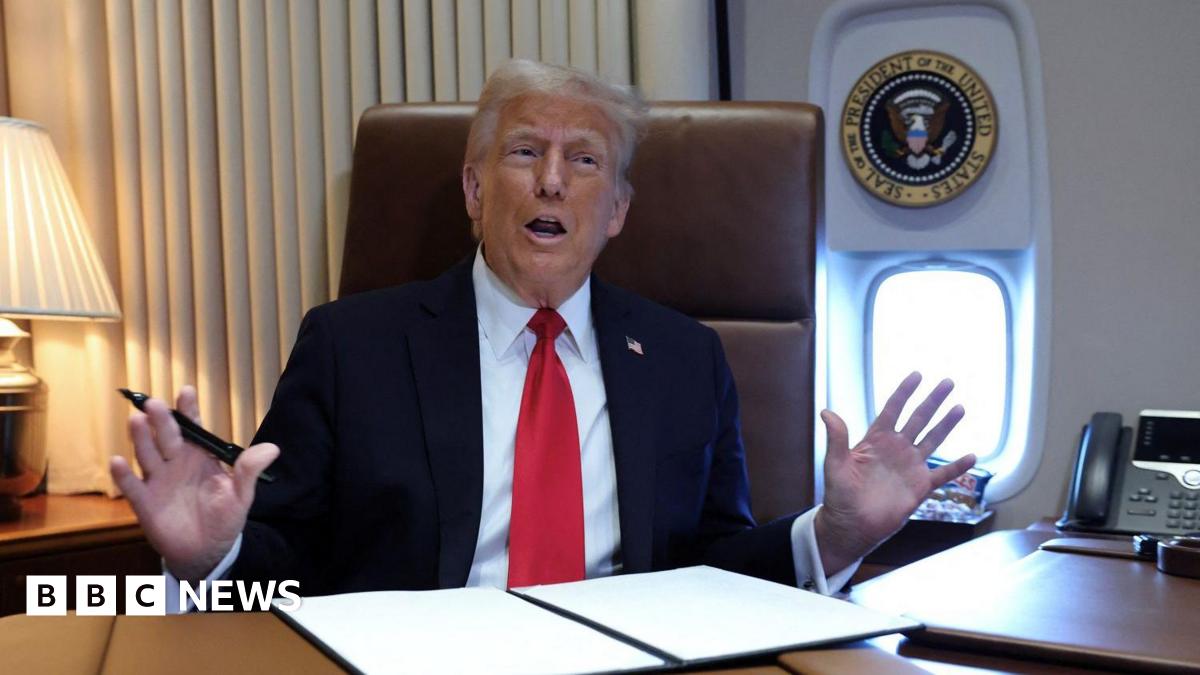
Speaking aboard Air Force One, Trump said on Monday he would announce tariffs on “everybody” for steel and aluminium.
“Any steel coming into the United States is going to have a 25% tariff,” he said.
In response, Doug Ford, the premier of the province of Ontario, accused Trump of “shifting goalposts and constant chaos, putting our economy at risk” in an online post. Canada’s steel production is concentrated in Ontario.
Canadian political adviser Catherine Loubier said she believed Trump’s threats were real but believed there could be a solution because of how connected the two economies are.
“Hundreds of thousands of jobs in the US are linked to the steel and aluminium input from Canada into the US economy,” she told the BBC’s Today programme.
“I think there’s a lot at stake and nobody’s winning with these tariffs, that’s for sure.”
Trump’s comments also caused the stocks of major South Korean steel and car makers to fall. South Korea is a major exporter of steel to the US.
Meanwhile, Australian Prime Minister Anthony Albanese told parliament his government will “make the case” to the US for Australia to be given an exemption to any steel and aluminium tariffs – something they got during Trump’s first term.
Albanese also said he has a meeting scheduled with the US president.
The shares of Australia’s largest steel maker BlueScope were up about 1.6%. The company has a significant presence in Ohio where it operates the North Star Mill.
Trump’s move mark another major escalation in Trump’s trade policy, which has already sparked retaliation from China.
Victor Gao, a Chinese diplomat and economist, blamed the US for the back and forth, but said China would not be too negatively affected because of US shoppers’ demand for cheap Chinese goods.
“[Chinese goods] are very much affordable and competitive even with a 10% tariff,” he told the BBC.