




























Five episodes into its first season, FX and Hulu’s Alien: Earth has established itself as a worthy small-screen extension of the surprisingly enduring franchise. Creator Noah Hawley continues to find interesting ways to expand the saga’s universe, introducing new concepts and frightening new creatures into its grungy futuristic world, while also reflecting present-day anxieties.
But while the series delivers the kinds of visceral, Xenomorphic thrills that fans no doubt expect (particularly in its masterful fifth episode), it finds its own unique groove when it’s not really focusing on the aliens at all. The first season’s larger episodic plot, which deals with the power struggles between future Earth’s massive corporations and the growing cracks within the Neverland group, is the series at its most compelling, allowing Hawley’s unique sensibility to shine through amidst the more familiar beats of the franchise extension.
‘Alien: Earth’s Non-Alien Plot
When it was first announced that FX would be bringing the Alien saga to television, it came with some understandable skepticism. Could a franchise that largely revolved around humans trying (and mostly failing) to survive an intergalactic apex predator really translate to more long-form storytelling? When the show first began, some skeptics may have felt their concerns were validated, as the two-episode premiere played out like a self-contained Alien movie, with the Xenomorph laying waste to a high-rise.
But any concerns were quickly laid to rest in Episode 3, when the series shifted into its long game. The alien plot is still very much present, but it has become intertwined with a larger story about the escalating conflict between the Weyland-Yutani Corporation and its rival mega-business, Prodigy. There has always been an element of class struggle in the Alien series, with workers forced into servitude to pay off debts to the companies that control the galaxy; however, Alien: Earth brings it to the forefront. Both humans and Xenomorphs alike are merely pawns in Prodigy’s plans to control the future.
Some fans may find this approach frustrating, but it introduces a new layer to the larger story, making the series feel more than just a retread. After four mainline films, two prequels, and an in-between movie, watching a Xenomorph stalk and kill a hapless crew of humans and androids has lost some of its spark, and the first two episodes of the series played similarly. There are only so many times you can watch a Xenomorph creep up behind somebody and bare its metallic teeth before it starts to feel a little stale. Expanding the story outward allows the series room to grow into its own while remaining anchored to the larger saga.
‘Alien: Earth’s Emphasis on Character

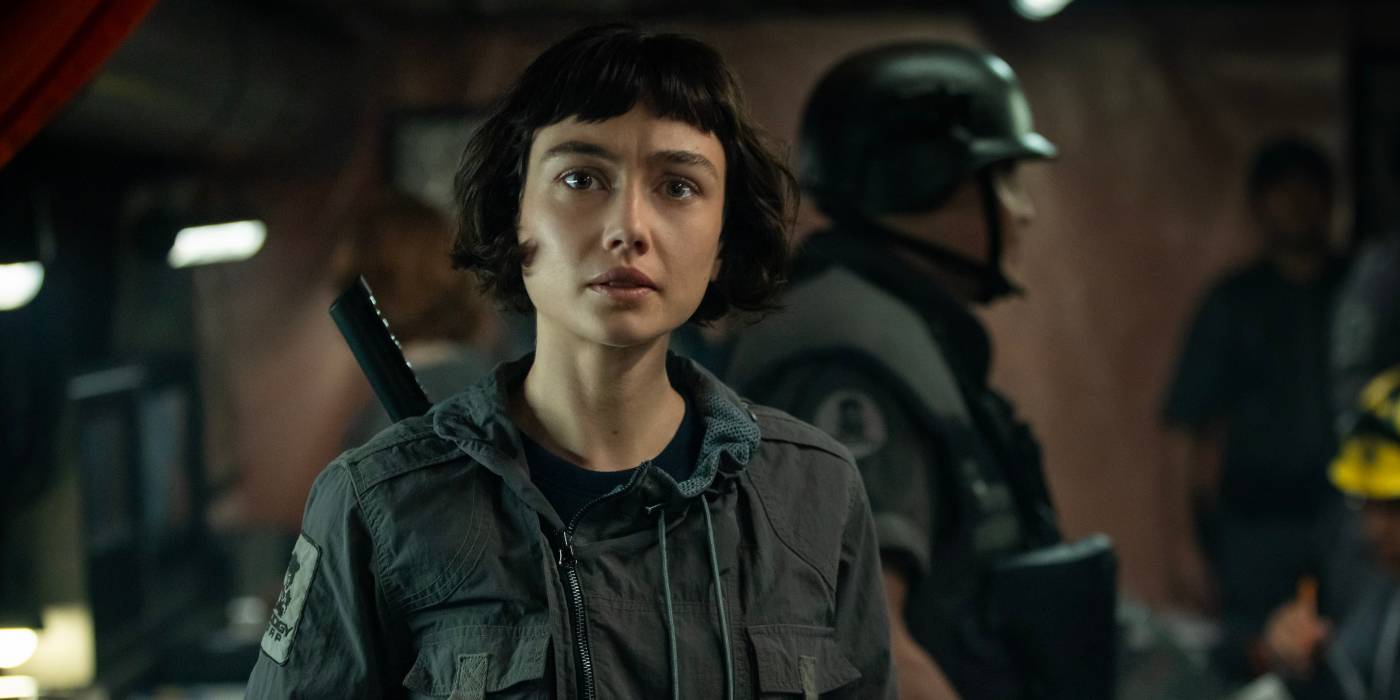
Beyond the larger plot machinations, the series also works well when it shifts into a slower gear, allowing the characters space to develop. Episodes 3 and 4 begin to explore the unintended consequences of putting children’s minds in adult bodies, as we watch Curly (Erana James) try to position herself at Boy Kavalier’s (Samuel Blenkin) right hand, Nibs (Lily Newmark) believe she’s pregnant, and Slightly’s (Adarsh Gourav) forced espionage at the behest of Morrow (Babou Ceesay). Meanwhile, Wendy (Sydney Chandler) is beginning to see through Prodigy’s plans for her, as Kavalier tries to push her away from her brother.
The Alien series has consistently excelled at creating relatable characters for the audience to root for (or against), making them more memorable than mere Xenomorph fodder, and Alien: Earth is shaping up in the same way. For a series to succeed in the long term, investing in characters is absolutely essential, and the show is wisely laying that groundwork early. Some fans may feel impatient watching this all play out, wanting to get back to watching aliens laying waste to hapless humans, but focusing solely on that approach would likely wear out its welcome very quickly.
Investing in character also makes the carnage, when it comes, that much more effective. The audience didn’t get a ton of time with the crew of the Maginot before they started getting picked off in Episode 5. However, enough time was spent establishing the characters and their relationships that their deaths carried some emotional weight. Fleshing out Morrow’s tragic backstory, leaving his daughter behind on Earth for his 65-year mission, also gives his motivations some extra power, as a man with nothing left besides his duty to his corporate overlords.
It’s tempting to feel that the series didn’t really need to be tied to the Alien franchise to work, or that the connection was retrofitted at some point in the process. However, it still manages to feel like part of the world established by Ridley Scott in his first film almost 50 years ago. Hawley has proven himself a master of remixing established IP in all kinds of interesting ways, particularly in his five seasons of Fargo or his X-Men spinoff Legion. His new series is never better than when it worries less about extending the Alien brand and instead lets him twist the franchise in his own way.







:max_bytes(150000):strip_icc():focal(471x244:473x246)/CNN-New-Years-Eve-with-Anderson-Cooper-123124-9952e5f00fc1425f87113ba2bfb97b29.jpg "Anderson Cooper Says He Once ‘Hated’ New Year’s Eve While Co-Hosting CNN Broadcast")