
















Acts of criminality. Pitting men against the world. Let’s not forget about one’s place in society. These are but just some of the themes that commonly run through legendary director Martin Scorsese’s works. There’s Travis Bickle in Taxi Driver, a Vietnam vet who appropriates his own form of vigilantism onto the streets of New York. In Goodfellas, Henry Hill’s romanticization of the mafia was too much for him to handle. Without going into so many other character makeups, this specific personification is the thematic template that Scorsese seems to love best. There is no better example of this than in his 1973 film Mean Streets. Through its use of dark lighting to convey mood and camera tracking in small spaces, this crime drama shows that it deserves a remake today.

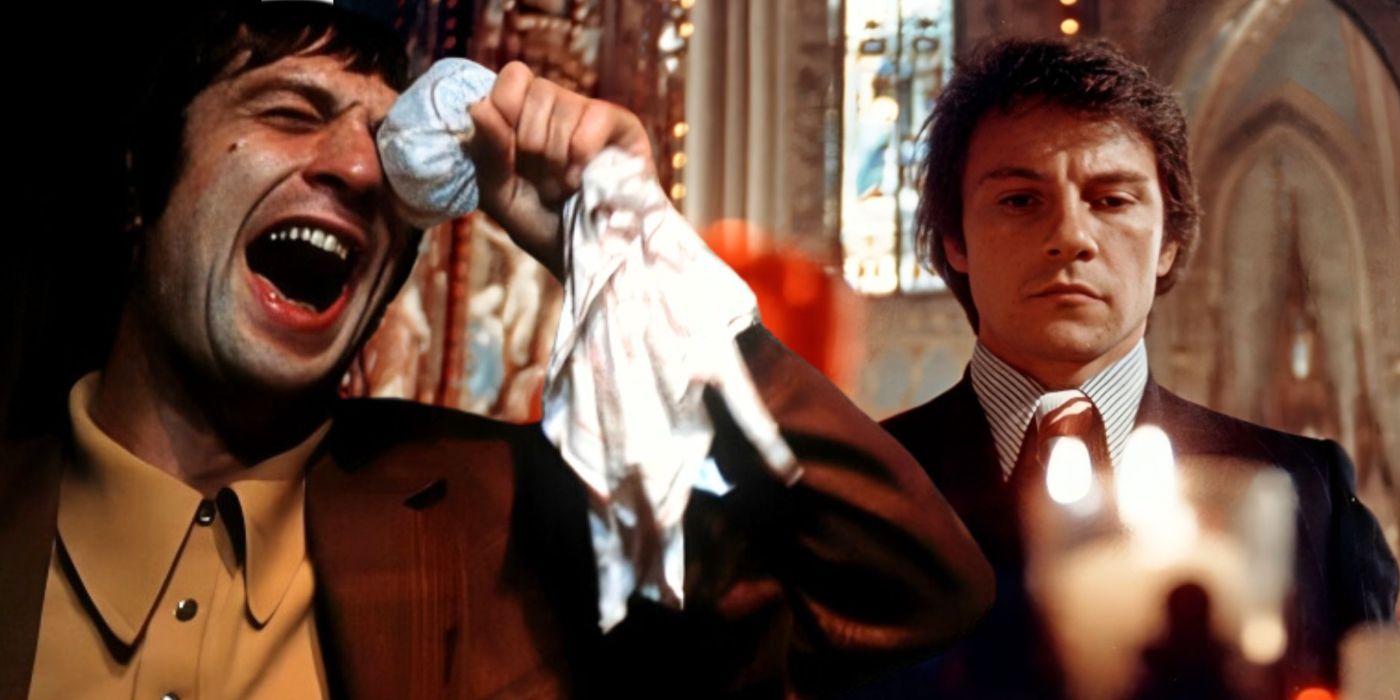
Believe it or not, this film was actor Robert De Niro’s first collaboration with the award-winning filmmaker. But you would never know it by watching Mean Streets. The performance is just too good. Alongside some other vested names, like Harvey Keitel (who plays Charlie Cappa) and David Proval (who plays Tony DeVienazo), De Niro transforms into John “Johnny Boy” Civello, a chaotic and carefree individual who does not mix well with the mafia culture in Little Italy, New York.
Even though Charlie has built himself a respected reputation within that sort of life, he still harbors a need to try and guide his anarchic friend away from the assorted loan sharks that John owes thousands of dollars to. Not only that, but Charlie is also dating John’s cousin, a woman named Teresa, who has epilepsy, a real brain disorder that Mafia members disregard and instead resort to calling her crazy.
‘Mean Streets’ Puts a Telling Spin on the Mafia
Between the main character’s struggle to balance these two lives and Scorsese’s almost experimental direction, Mean Streets would certainly find a place today. Throughout the movie, Charlie finds himself in numerous different locales: bars that are dark, dingy, and filled with shadows, Italian restaurants that are surprisingly narrow and brightly claustrophobic, as well as religious places where he resorts to burning himself to pay for his sins. Being an otherwise entertaining crime movie filled with violence, curses, and some nudity, Scorsese’s third film also has symbolism in almost every scene that should be explored.

Related
Scorsese and DiCaprio’s ‘Devil in the White City’ has found a new home at 20th Century Studios and will be a feature-length film.
The dynamic between Charlie Cappa and Johnny Boy is very similar to Of Mice and Men’s George and Lennie. As Mean Streets plays on, you are left wondering how much the former is willing to sacrifice to keep the latter in good graces with the rest of society. While the movie never dives into Johnny Boy’s apparent declining mental health — as such an analysis would perhaps ground the character into a more understandable and sympathetic human being — such a direction would be perfect for modern audiences, and the shocking ending would end up hitting even that much harder.
A ‘Mean Streets’ Remake Should Raise the Tension
Not only would Mean Streets become relatable to those who found themselves pulled in two different directions, but the movie as a whole challenged the gangster genre. The suit-wearing tough guy (belonging to organized crime) mixing in with such sensitive topics on the big screen was certainly a risky move for a newer face like Scorsese, but it worked out beautifully. As with the time, mob movies have declined in popularity, but a nuanced spin like this could revitalize the genre.

Related
Willem Dafoe Says This Martin Scorsese Movie Was “One of the Best Experiences” He Ever Had
“I gave it everything I had.”
While Keitel and Richard Romanus (who portrayed a loan shark chasing down Johnny Boy) showed off two sides of the same coin, the tension could be elevated even more, and a clear toll could come across Charlie if a remake were made. A shylock should be intimidating, but for some reason, this is not the case for the young mafioso member. While Charlie tries to be respectful and meet everybody in the middle, the three-way confrontation feels a bit lax. A different director’s vision could add more raw emotion to liven things up.
Don’t Forget About ‘Mean Streets’ Soundtrack
Mean Streets offers another interesting angle that could be tinkered with, and that’s found in the expressive soundtrack. Along with other hits of the ’50s and ’60s (which contrast the movie’s overall tone with bouncy romance numbers), Be My Baby accompanies the introductions of Charlie, Johnny Boy, and their toxic relationship. Even though many vintage pop songs are featured, they all help elevate the impact of what we see on screen. That is, bringing viewers back to a certain time and place is a tactic still used today by many movies and television shows — even commercials. Whenever the potential remake of this story of brotherhood and self-identity is set, the right soundtrack selection could make all the difference.
Let’s not forget that this movie was released over 50 years ago. As much acclaim and praise as Mean Streets has received over the years (from The New York Times, Roger Ebert, and Spike Lee, for example), there is certainly a sizable audience out there who have never seen this film. It’s about time we had other selections besides gun-fu and superhero movies. What better alternative than an updated look at a Martin Scorsese classic? For now, though, Mean Streets is available to rent on YouTube, Prime Video, and Apple TV.