


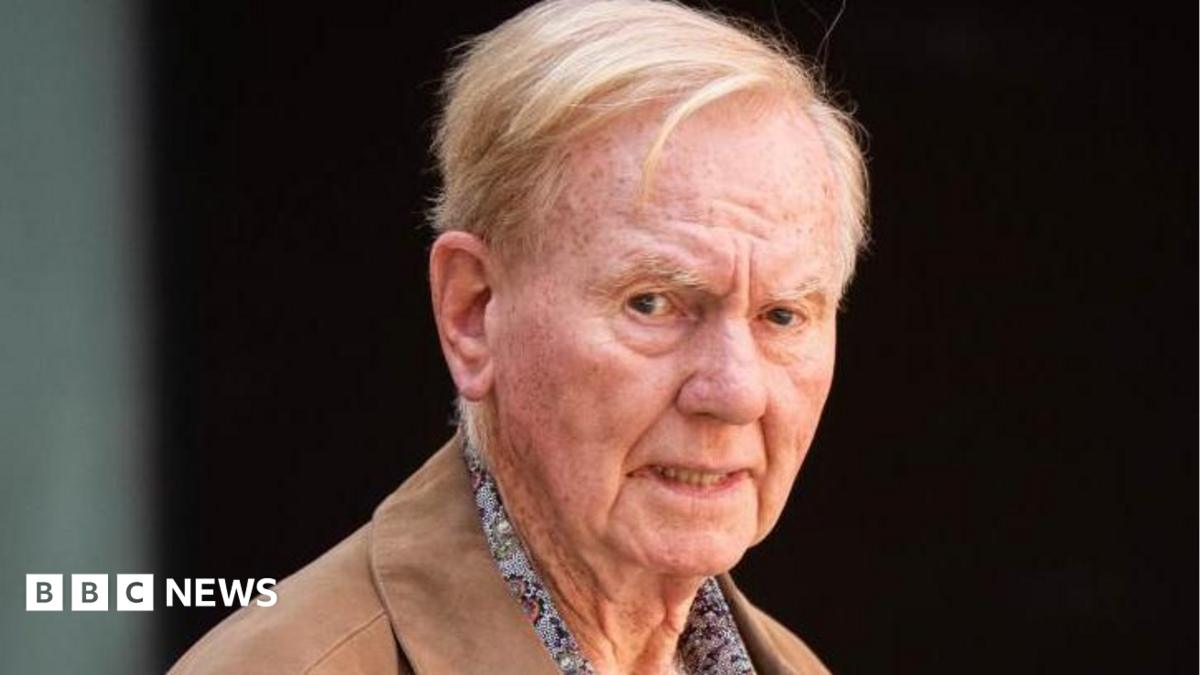
























Ridley Scott is a walking movie factory. He is 87, yet you can always expect a movie from him every year or two. His industriousness can only be compared to that of Golden Age directors like John Ford and Alfred Hitchcock, who made a movie every year. And Scott is showing no signs of slowing down. Four movies are reported to be in his oven, namely The Dog Stars, a Bee Gees biopic, Gladiator III, and a new Alien installment.
Speaking of a fresh Alien adventure, Ridley Scott is celebrated for making some of the best science fiction movies. And he credits the first Star Wars movie for triggering his creativity. “I was going to do Tristan & Isolde next,” he said, adding, “But how could I be doing Tristan & Isolde when this guy (George Lucas) does this?” Additionally, he has cited Stanley Kubrick’s 2001: A Space Odyssey as another source of inspiration, and we are sure many younger filmmakers are also inspired by Scott’s sci-fi work. Here is how his movies in the genre rank against each other.
5
‘Alien Covenant’ (2017)
Alien: Covenant
- Release Date
-
May 19, 2017
- Runtime
-
123 Minutes
- Prequel(s)
-
Aliens
It is the year 2104 in Alien: Covenant, and the spacecraft, Covenant, carrying 2,000 colonists and 1,140 human embryos in cryogenic stasis, is on its way to Planet Origae-6. Scientists have just learned that the planet is capable of sustaining mankind. Consequently, world governments have coveted it, intending to colonize it. Unfortunately, an accident happens on the ship, killing several people, including the captain. During repairs, the new captain detects a human voice from another planet and decides to head there instead. But it turns out to be a poor decision.
The Weakest Film in the Alien Franchise
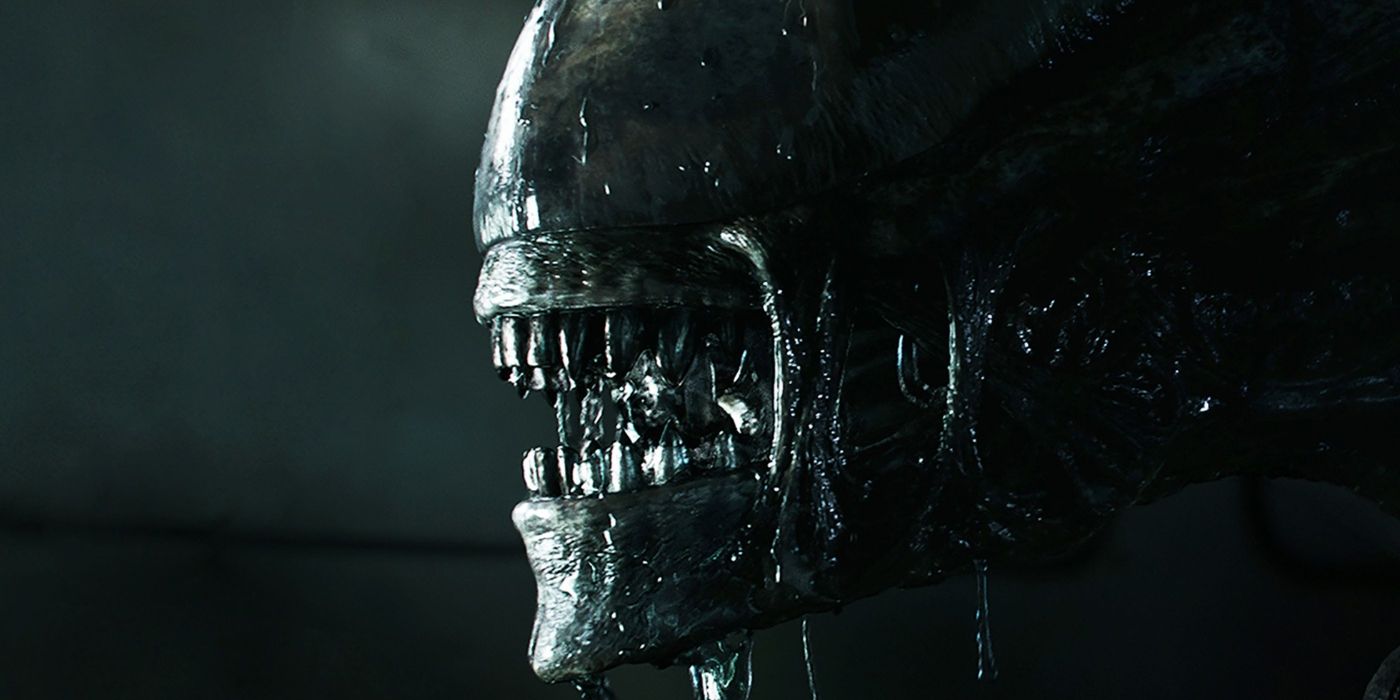
Scott hit the big time with the first Alien movie in the late 1970s, so it makes sense for him to still feel some attachment to the vast franchise, many decades later. Alien Covenant’s unforgettable Jed Kurzel score and the filmmaker’s intelligent mounting of suspense remind us why we have always loved this particular fictional world. Besides that, Michael Fassbender and Katherine Waterston make up an appealing duo of central characters.
Like most Ridley Scott films, Covenant is also visually striking. However, it fails to offer anything new. Worse still, the characters keep making many dumb choices, such as splitting up when in danger or removing the gear on a foreign planet even before the oxygen and toxicity levels in the atmosphere. Definitely could have been better.
4
‘Prometheus” (2012)

Ridley Scott and James Cameron were supposed to make Prometheus together, but the latter pulled out. Thankfully, the film fared just fine. In it, the crew of the spaceship Prometheus heads to the distant moon, LV-223, after discovering that it holds clues to the mysterious alien race known as the Engineers. The extraterrestrials are reported to have created humans, so a team of scientists investigates. But once the ship lands, deadly infections happen, coupled with strange mutations and violent deaths. Who will survive?
Rewriting Genesis
Stunningly picturesque, and at times hellish, Prometheus reaches a high watermark for sci-fi filmmaking. No surprise when the movie received an Oscar nomination for Best Visual Effects. Scholarly minds who are obsessed with the origin of mankind will appreciate the alternate theory that Ridley Scott presents here, and those in it for the thrill will appreciate the inclusion of numerous squeamy moments, notably, Shaw’s self-surgery.
Overall, the film could have used better dialogue but its other strong pillars compensate. Despite not participating, James Cameron was in awe, stating: “I thought it was great. I thought it was Ridley returning to science fiction with gusto, with great tactical performance, beautiful photography, great native 3D.”
3
‘The Martian’ (2015)

Based on Andy Weir’s 2011 novel of the same name, The Martian stars Matt Damon as the astronaut Mark Watney (Matt Damon), a member of the Ares III mission to Mars in 2035. When a deadly dust storm emerges and Mark is struck by debris, his crew assumes he is dead and leaves him behind during their evacuation. Stranded, Mark attempts to create food and communicate with NASA.
Screenwriter Drew Goddard was initially attached to direct, but Fox wasn’t sure about his abilities, so they stalled. Production was only approved after Ridley Scott and Matt Damon came on board, and well… we can’t complain.
The Greatest Lost-in-Space Movie?
Hollywood is packed with great lost-in-space movies, but The Martian is one of the most scientifically accurate ones, an expected outcome considering that James L. Green, the Director of the Planetary Science Division at NASA’s Science Mission Directorate, was on board to answer all questions that Scott had during production.
While so many space films focus on the thrills, this Ridley Scott gem prioritizes ingenuity. It’s beautiful, watching Mark create a garden using Martian soil fertilized with bio-waste and manufacturing water from rocket fuel. The screenplay balances an acutely observed sense of mundane, normal life with unexpected touches of inventiveness. Nominated for seven Oscars, this warm, winning sci-fi flick never shies away from the themes of regret, solitude, and pain, but suffuses its plot with a reassuring sense of resilience, hope, and possibility.

Related
All 9 of Ridley Scott’s Historical Films, Ranked (Including ‘Gladiator II’)
Ridley Scott’s fondness for historical movies has seen him make several of them, notably Gladiator. So, which is the best?
2
‘Blade Runner’ (1982)

Ridley Scott imagined that in 2019, humans would have already witnessed enough chaos, stemming from unregulated tech advancements. In Blade Runner, bioengineered humanoids known as Replicants caused so much havoc that they were banished from Earth. Unfortunately, four of them have returned, so former police officer Rick Deckard (Harrison Ford) is given a new assignment as a “Blade Runner” (agent tasked with hunting down Replicants). He gets to work, only to make shocking discoveries.
Interestingly, seven different versions of the movie exist as a result of numerous controversial changes requested by studio executives, though the plot changes are minor. The 1992 director’s cut and the 25th-anniversary final cut are the most notable ones.
One of the Most Impactful Sci-Fi Films
Blade Runner was hated by critics at first. They later came to recognize it as a razor-sharp yet very human sci-fi masterpiece that excites the mind and warms the heart. Scientists also recommend it, believing it serves as a prediction of the mess that will emerge in the future as a consequence of bioengineering experiments. And cyberpunk fans will always cherish it as one of the movies that laid the proper foundation for the genre, given its marvelous depiction of a high-tech but moldering world.
Beyond that, the film didn’t just benefit Scott and the studio. Adapted from Philip K. Dick’s 1968 novel Do Androids Dream of Electric Sheep?, the movie brought Hollywood’s attention to the author’s amazing and extensive work, resulting in several adaptations.
1
‘Alien’ (1979)

Alien, Scott’s first hit, follows the crew of the Nostromo as they investigate a distress signal from a mysterious planet. Once they land, they find a derelict alien spaceship and decide to peep, only to be attacked by a vicious creature. Led by Ripley (Sigourney Weaver), they find themselves in a brutal fight for survival.
Hollywood Brilliance Doesn’t Come Better than This
Weaver is a magnetic presence, as is the charming Tom Skerritt, playing the spacecraft’s captain. Overall, Alien is more than a sci-fi flick. Scott finds plenty of chances to critique human curiosity while showcasing some of the most terrifying scenes in cinema. Like Blade Runner, Alien was initially met with mixed reviews, though it won the Oscar for Best Visual Effects. As the years flew by, it was reassessed and is now considered one of the greatest horror sci-fi hybrids ever made.







:max_bytes(150000):strip_icc():focal(471x244:473x246)/CNN-New-Years-Eve-with-Anderson-Cooper-123124-9952e5f00fc1425f87113ba2bfb97b29.jpg "Anderson Cooper Says He Once ‘Hated’ New Year’s Eve While Co-Hosting CNN Broadcast")