

















Verdict
Triangle breathes new life (as well as some vibrant new finishes) into its Capella wireless streaming system and the results are (almost entirely) positive. In the context of its rivals, though, the Capella 2 is not automatically the complete article
-
Organised, detailed and consistent sound
-
Extensive specification includes 24-bit/192kHz wireless streaming
-
Great standard of build and plenty of options for finish
-
Low frequencies could be more assertive
-
Slightly eccentric control app
-
Hint of midrange coarseness on occasion
Key Features
-
Hi-Res audio
24-bit/192kHz wireless streaming
-
Power
200 watts of Class D amplification
-
Bluetooth streaming
Bluetooth 5.2 with aptX HD
Introduction
Triangle launched its first Capella wireless speaker system just a couple of years ago – but the company has taken the opportunity to think about the looks and the specification, and the result is this Capella 2.
In these two years, though, the market has become ultra-competitive to the point that some fancy new finishes aren’t likely to be enough – does Capella 2 have what it takes to compete where the really important stuff is concerned?
Design
- Choice of five finishes
- Down-firing bass reflex port
- Colour-coded hub, grilles and (optional) stands
The rather striking nature of the ‘English’ green finish of my Triangle Capella 2 does, for a moment at least, distract you from what a straightforward and traditional design template this product follows.
Each speaker is a manageable 38 x 20 x 32cm (HWD), and the beautifully constructed and finished cabinets are gently curved at the vertical edges. This has tangible sonic benefits, says Triangle, but it also serves to make the speakers look a little more sophisticated and a little less hard-edged than they otherwise would.

The supplied grilles are magnetically attached, and colour-coded to match the speakers – the same is true of the Stereo Hub 2 that I discuss in proper detail in the Features section. English green is far from your only choice here, though – the original Capella system was only available in Space white or Astral blue, but as well as the new English green option you can also have Space black or oak if you prefer.
There’s a downward-firing bass reflex port at the bottom of each cabinet, and the slender, integrated little stand each speaker is fitted with raises the speaker to a height where the fixed boundary provided by whatever it’s standing on is ideal.

Triangle, naturally, will point you in the direction of its dedicated S05 stands (£279 per pair in the UK) – as well as being eminently fit for purpose, the S05 are available in all five of the finishes in which the speakers are offered as well as a sixth option which Triangle calls ‘wood’. Which I presume is distinct from ‘oak’.
Features
- Wireless and wired inputs via the Stereo Hub 2
- 100 Class D watts of power per channel
- 24-bit/192kHz wireless streaming
Some parts of the original Capella system have been deemed ideal for use in this updated product, and have been carried over. Others have come in for quite an overhaul.
The driver array, for instance, is unchanged. A 25mm horn-loaded magnesium/aluminium alloy dome tweeter, featuring a phasing piece at the horn outlet in a drive for better off-axis performance, sits above a 165mm mid/bass driver made from untreated, 100 percent natural cellulose pulp.

This bigger driver has a vented aluminium chassis and a half-roll suspension of rubber and foam – both drivers featured heavily textured rubber surrounds that, just like the curve of the cabinet, are intended to assist with soundwave dispersion. Triangle is claiming a frequency response of 42Hz – 22kHz, which is of course assisted by that down-firing bass reflex port.
Power, too, is the same as before – which means a very acceptable 100 watts of Class D amplification per speaker.
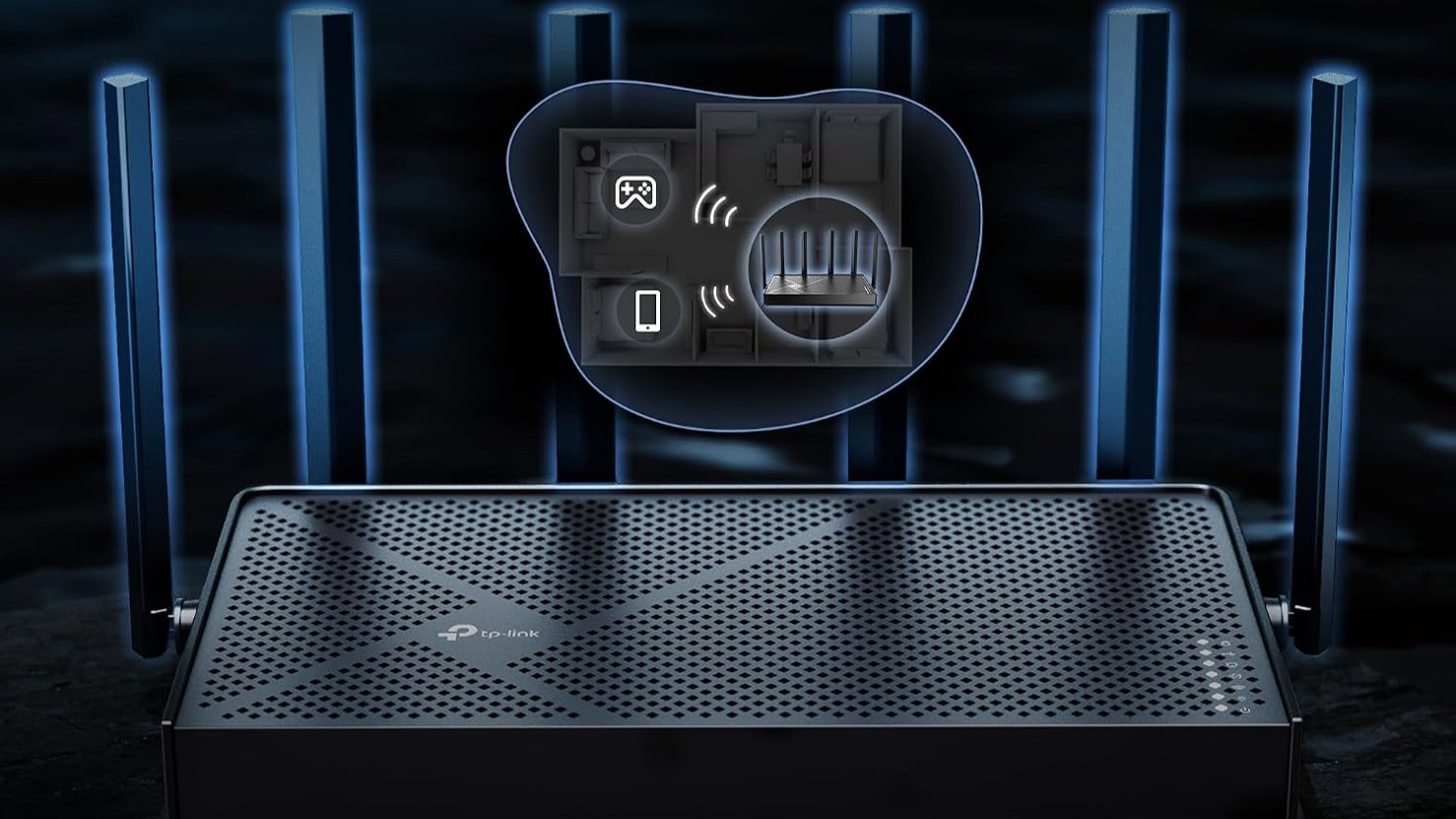
And the use of a streaming hub to take care of all wired and wireless connectivity, rather than have one of the speakers deal with it, is carried over too – along with the WiSA technology that streams to the speakers at high resolution (24-bit/192kHz) and low latency (
It features dual-band Wi-Fi, of course, and thanks to its newly upgraded Cortex A53 processor it features support for Spotify Lossless, for Qobuz Connect and TIDAL Connect, for UPnP, and is Roon Ready too, in addition to compatibility with AirPlay and Google Cast.

Bluetooth 5.2 is available, with codec support up to aptX HD. There’s now an Ethernet port and a pre-out for a subwoofer on the hub, which are both very welcome additions. Other physical inputs include a line-level analogue input on stereo RCAs, three digital optical inputs, a digital coaxial socket, USB-A and USB-B, and HDMI eARC.
You can operate the major functions using an upgraded remote control. It’s made chiefly from aluminium, is rechargeable via its USB-C slot, and is RF rather than IR – which is helpful too. Its little LEDs ensure it’s more usable than the unlit alternatives offered by quite a few of the Capella 2’s price-comparable rivals.

You get much greater input into the way the system performs via the Capella control app that’s free for iOS and Android, though. It’s short of playback control, true (you’ll have to use the native app of your favourite streaming service, which is a mild faff), and it’s far from the most attractive or logical in its layout, but it offers plenty of fine-tuning when it comes to speaker placement, frequency response, integrating a subwoofer and so on.
The ability to run an automatic room calibration routine using just an iOS device (just like Sonos, and with Android compatibility apparently incoming) is nice – and it proves so swift and effective that the idea of spending money on Triangle’s dedicated Zen mic seems a bit daft.
Sound Quality
- Detailed, organised and dynamic sound
- Consistent via any source
- Slightly lightweight bass response
It’s nice to be able to state that everything I’m about to say about the way the Triangle Capella 2 sounds applies no matter which of its many and various inputs you’re using.
There are qualitative differences between a 24-bit/44.1kHz FLAC file of Holy Ghost by Young Fathers streamed via TIDAL Connect and the same recording delivered as a 320kbps Spotify stream via Bluetooth, of course – but the fundamental character and attitude of the system doesn’t alter – which makes it a much more consistent listen than some price-comparable alternatives.

So it makes no odds to the Capella 2 where your music is coming from – it’s served up in positive, organised fashion and laid out on a soundstage that’s open, spacious and easy to understand.
There’s not the outright scale of presentation that some rivals can summon, it’s true, but it can escape the physical confines of its cabinets just fine – and its ability to control a soundstage and give the individual elements on it the space they need in which to operate is a match for any similarly priced system. The Capella 2 manages to make those individual elements sound like part of a unified whole, too, creating a sense of performance that’s by no means a given.
Detail levels are high across the board – and this goes for the finest, most transient details just as much as it does the broad strokes of a recording.

Information regarding texture and timbre is always forthcoming, and even down at the bottom of the frequency range (where, in truth, the Triangle sounds just a little insubstantial when compared to the rest of the frequency range) there’s a whole lot of variation and insight available to go along with simple bass-end punch. The Capella 2 controls its low-end activity carefully, too, so it has no problem expressing rhythms directly and with confidence.
That impressive facility with detail retrieval extends as far as the harmonic discrepancies and variations in a voice or an instrument, and is especially apparent in the midrange – the Triangle is winningly open and revealing in this part of the frequency range. It’s not above letting a suggestion of coarseness or grittiness creep into its midrange resolution, but when it comes to simple powers of communication it’s up there with the best of them.

Despite this, though, overall tonality is nice and neutral, with the system giving every indication that it’s happy to get out of the way of a recording and allow it to express itself. The top of the frequency range balances brightness against substance well, the transition to the midrange is smooth, and even though there’s that little concavity as the journey continues down into the low frequencies, tonality remains balanced and convincing.
What else? Well, dynamic headroom for those big shifts in volume or intensity is more than adequate. The ability to play good and loud without altering the basics of the presentation is not to be sniffed at, either. And the Capella 2 remains sonically unstressed no matter how frantic, how complex or how out-and-out attacking a recording might be.
Should you buy it?
You want wireless speakers
By taking all connectivity away from the speakers and placing it in a hub, each speaker only requires mains power
You want this to be an end to your spending
As well as the option of speaker stands, there’s a chance the sound of the Capella 2 will have you investigating the possibility of a subwoofer…
Final Thoughts
There’s a lot to be said for the road less travelled, and when it comes to the aesthetic of the Triangle Capella 2 it seems safe to say you’ll never mistake it for any other system (even if your Capella 2 isn’t finished in a quite vibrant green colour).
The off-board Stereo Hub 2 is a nice point of difference too. And the individualistic nature of this system extends even into the way it sounds – and even more so than the colour, you’ll make your own mind up here…
How We Test
The Triangle Capella 2 speakers are positioned on their dedicated S05 stands (a cost option, don’t forget) and each is plugged into the main.
The Stereo Hub 2 is also mains-powered, and as well as receiving a wireless signal via Bluetooth and via TIDAL Connect, it’s also receiving from a pre-amplified Technics SL-1300G turntable (via the analogue input) and a Rega Apollo CD player (via one of the trio of digital optical inputs).
This allows music from various sources, of various styles and file-types, to be received and wirelessly sent to the speakers – and this happens for the thick end of a working week.
- Tested for a week
- Tested with real world use
FAQs
No, but compatibility with the ‘Connect’ versions of Qobuz, Spotify and TIDAL goes some way to making up for it.
The HDMI eARC socket means it’s easy to allow your TV to join the system (as long as you can make an HDMI connection to the Stereo Hub 2).
Between room calibration using an iOS device and the numerous options available in the app, the Triangle may not be the easiest but it’s among the most thorough.

Full Specs
| Triangle Capella 2 Review | |
|---|---|
| UK RRP | £2299 |
| USA RRP | $2899 |
| EU RRP | €2499 |
| CA RRP | CA$3999 |
| AUD RRP | AU$5499 |
| Manufacturer | – |
| Size (Dimensions) | 200 x 320 x 380 MM |
| Weight | 8.5 KG |
| Release Date | 2026 |
| Audio Resolution | Up to 24-bit/192Hz |
| Driver (s) | 25mm horn tweeter with magnesium alloy dome; 165mm natural cellulose pulp cone mid/bass driver |
| Ports | HDMI eARC; digital coaxial; 3 x digital optical; stereo RCA; USB-A; USB-B |
| Audio (Power output) | 100 W |
| Connectivity | Wi-Fi; Bluetooth 5.2 with aptX HD; AirPlay; Chromecast, Roon Ready; Spotify Connect; TIDAL Connect; UPnP |
| Colours | White; Black; Green; Blue; Oak |
| Frequency Range | 42 22000 – Hz |
| Audio Formats | AAC; AAC-LC; HE-AAC2; ALAC; APE; FLAC; MP3; WAV; WMA |
| Speaker Type | Active Speaker |






:max_bytes(150000):strip_icc():focal(471x244:473x246)/CNN-New-Years-Eve-with-Anderson-Cooper-123124-9952e5f00fc1425f87113ba2bfb97b29.jpg "Anderson Cooper Says He Once ‘Hated’ New Year’s Eve While Co-Hosting CNN Broadcast")